


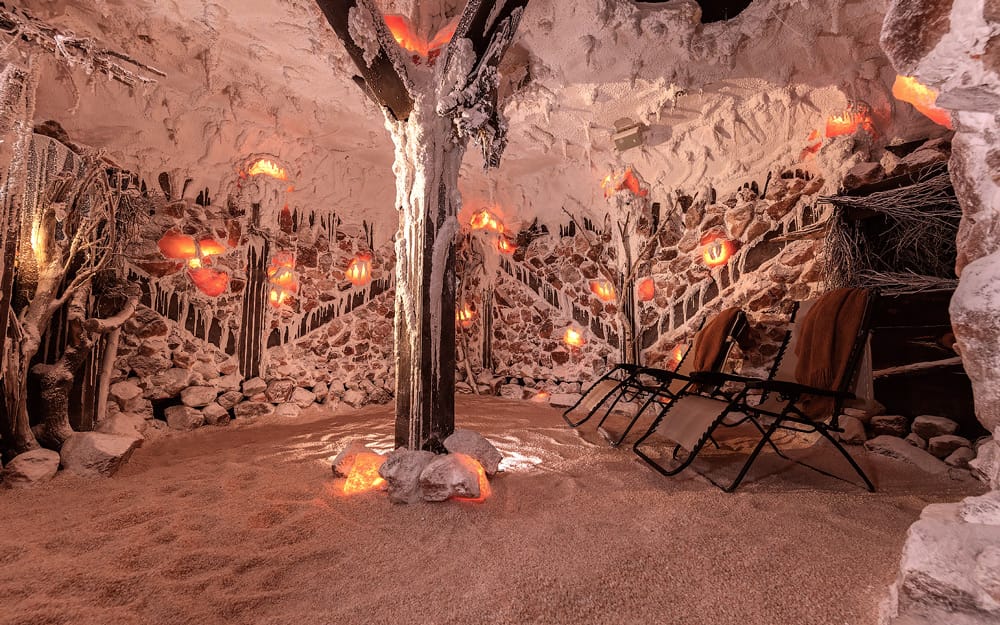
Salt cave sessions are designed to recreate a very specific kind of environment, one that’s quiet, controlled, and centered around breathing in salt-rich air. While it might seem simple from the outside, the experience feels noticeably different once you’re inside.
Unlike typical spa treatments that involve movement or hands-on techniques, halotherapy is more passive, allowing you to sit back, breathe normally, and let the environment do the work.
How a Salt Cave Environment Works
Halotherapy, often referred to as salt therapy, is based on the idea of inhaling fine salt particles in a controlled space. These environments are designed to mimic natural underground salt caves, where the concept originally developed.
At Santé, the cave is built to reflect those conditions, including:
- A calm, low-stimulation atmosphere
- Controlled temperature and humidity
- Salt dispersed into the air
- A quiet setting that encourages relaxation
The overall goal is to create a microclimate that feels separate from the outside environment.
What It Feels Like Inside
Once inside the cave, it doesn’t take long to settle into the environment. Guests typically recline in comfortable chairs, with minimal distractions around them. There’s no need to move around or follow any instructions, just sitting and breathing is enough.
Many people notice:
- A quieter, more settled mental state
- A sense of calm from the stillness of the room
- Easier, more focused breathing
- A gradual release of tension
Because there’s no active part of the treatment, the environment itself becomes the main focus.
Why Salt Is Used
The salt in the air is a key part of what makes the experience different. In a salt cave setting, tiny particles are dispersed into the air and inhaled naturally as you breathe.
This type of environment has been used for generations in regions with natural salt mines, where people would spend time underground as part of wellness routines.
Modern salt caves are designed to recreate that same setting in a more accessible way, without needing to travel to those locations.
Salt Cave Halotherapy at Santé
At Santé in Thornhill, our salt cave is a dedicated space designed to replicate this kind of environment in a comfortable, controlled setting.
When you come in for halotherapy at our Thornhill spa, you’ll enter a quiet room designed with Himalayan salt elements throughout. The space is kept at a consistent temperature, with a relaxing atmosphere that makes it easy to settle in.
During the salt therapy at our Thornhill spa, guests typically recline in gravity chairs and spend the session breathing normally while the salt-infused air circulates. There’s no talking during sessions, which helps maintain the calm environment and allows for a more focused experience.
The setup of our Thornhill salt cave is designed so that the experience feels simple and uninterrupted. There’s nothing to actively do during the session, which is part of what makes it easy to settle into.
Many people choose halotherapy at Thornhill’s Santé as a way to step away from daily noise and spend time in a quieter setting. The combination of stillness and the salt cave environment creates a different kind of break compared to more active treatments.
For those looking for a more passive, low-effort experience, salt therapy at our Thornhill spa offers a way to sit back, breathe, and reset without needing to think about the process.
Overall, the experience is less about doing something and more about being in the right environment, one that encourages both physical and mental relaxation through simplicity.